
Letter to an agony aunt
In the next few lessons you will read a letter to an agony aunt, find out more about vegetarianism and finally be ready to give the mother advice on what she should do.
Below you can find a worried mum’s letter to Louise, who works as an agony aunt for a local newspaper in Kentucky.
Dear Louise,
our family has always liked eating meat, especially on occasions like Thanksgiving and Christmas. It was like this in my childhood and it has then become a tradition in my own family as well. Family barbecues are among my most favourite events. And even on regular days, our meals often include meat.
I'm writing to you because five weeks ago, our kids told us they would to stop eating meat. They took us by complete surprise, we weren't prepared at all. My husband doesn't take it seriously, he says it's just teenagers wanting to rebel a bit. But I have the feeling that our kids really mean it, after all they haven't eaten any meat since then.
Our son thinks there are countless reasons for being a vegetarian. He keeps talking about factory farming and how disgusting he finds the ways animals are treated on these farms. This seems to be his biggest worry. But I'm afraid it's just one of the things we have to accept. How else can farmers produce enough meat for everyone? Yet he claims that eating meat isn't necessary at all. He thinks you can get enough protein from things like milk, eggs, lentils, and tofu. But I don't agree. Humans have always eaten meat as they evolved. It feels unnatural to stop eating meat, especially for adolescents.
Our daughter, who is fifteen, also talks about health and animal welfare, but she's most worried about the environment and climate change. She's upset about how much of the rainforest is destroyed every year. She says this land is then used to raise cattle. She keeps asking us what kind of future our planet will have if we don't act quickly. I know it's a big problem, but I'm not sure if giving up on meat completely is the solution, for me it's part of a healthy diet and, as I explained above, a family tradition I wouldn't want to give up. I don't mind eating less meat, but stopping it altogether seems like a major mistake. And buying organic meat is too expensive for us, we simply can't afford it.
What can I say to my kids to help them understand?
Worried mother, Kentucky
Understanding the letter
Look for the English equivalents in the text and write them down.
Grillen mit der Familie -
Für uns kam das völlig überraschend –
Mein Mann nimmt es nicht ernst -
... sie meinen es ernst -
zahllose Gründe -
Massentierhaltung –
abstoßend -
die Art, wie Tiere behandelt werden -
seine größte Sorge -
... er behauptet -
genügend Protein -
Jugendliche / Heranwachsende -
Tierwohl -
sie macht sich am meisten Sorgen über -
... wie viel Regenwald zerstört wird -
sie fragt uns dauernd -
wenn wir nicht schnell handeln -
ein großer Fehler -
Biofleisch -
Wir können es uns einfach nicht leisten -
Understanding the parents and the children
Find more quotes from the letter that contain the present perfect (e.g. has done). Fill in the table.
|
quotes with present perfect |
meaning / function / effect |
|---|---|
|
our family has always liked eating meat |
for a long time, from a point of time in the past to the present, the family has enjoyed meat; the mother wants to give background information so that the agony aunt can understand her situation |
| … |
… |
|
… |
… |
|
… |
… |
Talking about statements from the letter
Find a partner / partners and discuss the following statements which are taken from the letter to Louise. Use at least 5 expressions from the list above. In addition, use conditional
sentences (e.g. If all of my friends stopped eating meat, then barbecues wouldn't be fun anymore) in your conversations about statements 2 and 3.
Statement 1: "My husband doesn't take it seriously, he says it's just teenagers wanting to rebel a bit." Discuss if you can understand the father's attitude.
Statement 2: “Humans have always eaten meat as they evolved. It feels unnatural to stop eating meat completely.” Discuss if you agree or disagree.
Statement 3: “I don't mind eating less meat, but stopping it altogether seems like a major mistake..” Talk about the opinion of people around you (family, friends) on vegetarianism.
Information on meat consumption and vegetarianism
a) Read the following texts.
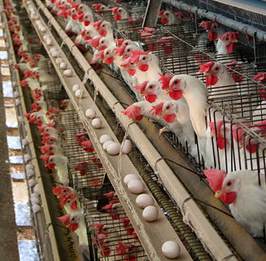
von agriculturasp [CC BY 2.0)], via Flicker
A vegetarian diet is balanced and includes cheese, nuts, lentils, soy, eggs and other sources of protein, then it is just as healthy as a diet that includes meat. Some scientists say that vegetarians are less likely to suffer from high blood pressure and heart attacks. While human bodies certainly need enough protein, it shouldn’t be the biggest worry when it comes to a healthy diet. One of the major health risks today is the high amount of sugar that people consume. Consequently, those who worry about health risks should cut down on sugar and make sure they eat plenty of vegetables and fruits.
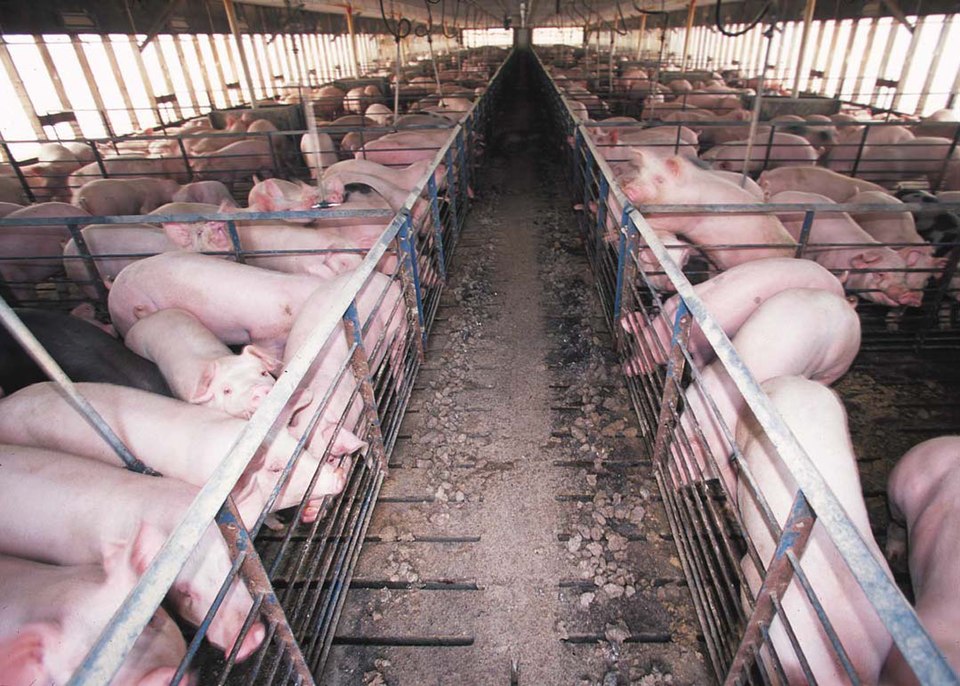
b) Treatment of animals: Most of the meat that is offered in supermarkets and restaurants comes from factory farms, also known as intensive livestock farms. Animals at factory farms are often under stress because they have very little room. As a consequence they sometimes attack each other or try to eat each other. These attacks can cause injuries and infections.
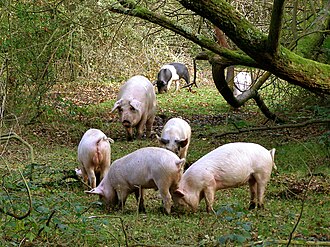
That’s why many farmers cut off the beaks of chicken and remove the teeth of piglets. But you can also get meat from animals that are allowed to move freely within and outside their barns. These animals are called free-range animals. Meat from free-range animals is usually more expensive than meat from factory-farmed animals.
c) Destruction of the rainforest: The average European indirectly consumes more than 60 kg of soy each year through the consumption of meat. Most farm animals, especially chicken and pigs, eat a lot of soy and a large proportion of the soy that they eat is grown on fields in South America on areas that used to be rainforest. In addition, especially in recent years, lots of rainforest has been destroyed to make room for cattle farming. This means that meat production and the destruction of the rainforest are clearly connected.
d) Climate change
In general, almost all of the food that people eat has a negative effect on the climate. However, it depends on the type of food how strongly it affects the climate. Food that is made from plants like corn, vegetables, fruits and nuts has a small effect whereas all types of food that come from animals like meat and cheese have a much larger effect. This means that reducing the amount of animal-related food can be an effective way of fighting climate change.
Collecting words and phrases from the texts
Fill in those words and expressions from the texts that are printed in italics.
|
English |
definition |
|---|---|
|
sources of protein |
food which contains lots of protein |
|
… |
not a lot of space |
|
… |
... can result in illnesses |
|
… |
keeping cows in large numbers |
|
… |
a way of eating which is good for your health |
|
… |
animals which can move freely if they want to |
|
… |
to reduce sugar |
|
… |
a selection of food that excludes meat |
|
… |
a big part |
|
… |
which in the past was rainforest |
|
… |
harmful consequences |
|
… |
acting against the warming of the earth |
|
… |
people who work at universities; academic experts |
Questions on the texts
Decide which statements are true according to the texts. Correct the other statements.
- Vegetarians often have a high blood pressure.
- Cheese, nuts, lentils and eggs contain a lot of protein.
- On average each European eats more than 60 kg of soy products each year.
- In recent years, lots of rainforest has been destroyed to make room for soy fields.
- Most of the meat that you can buy in supermarkets is from free-range animals.
- Free-range animals eat a lot of soy.
- Most of the meat from factory-farmed animals comes from South America.
Planning an answer: You are the agony aunt now!
Read the worried mum’s letter again and write down arguments that the children and the mother give. Then use your knowledge and react from the perspective of the agony aunt.
|
arguments for / against vegetarianism |
agony aunt’s reaction / answer |
|---|---|
|
The mother says meat is part of a healthy diet and necessary, especially for adolescents. |
We certainly need enough protein and meat contains protein, but so do eggs, lentils, tofu etc.. Your diet can be healthy without meat. You should worry about sugar, not about meat. |
|
… |
… |
|
… |
… |
| … |
… |
Completing phrases that you could use in your advice letter
When you complete the phrases, you can use your notes from exercise 1.7. Keep in mind that an agony aunt typically shows understanding for every opinion or position, but that she also clearly states what she thinks is right and wrong.
- You are obviously ... truly concerned that your children will not get enough protein if they don't eat meat.
- It seems to me that ...
- I can understand that you’re concerned about ...
- Your daughter is right when she says that ...
- While it's true that ...
it's also correct that ...
- It's probably a good idea to ...
- If you want to make sure that your children‘s diet is healthy, then ...
- In your letter you said that your son ...
- You can be proud of your children, they ...
- If we all ate less meat, this would ...
- You’re quite right when you say that organic meat is expensive. What you could do is ...
Putting it all together: Write an agony aunt’s answer to the worried mum – First version
Dear worried mother,
Feedback:
Now exchange your letters with two of your classmates and give them some feedback. In your feedback, tell your classmates
- if they have referred to both the mother’s worries and the children’s opinion
- if they have used the given information on health, animal treatment, the destruction of the rainforest and climate change
- if you think their answer might help the worried mother
- if they have used the new vocab, conditionals and the present perfect correctly
Writing an answer – second version
Dear worried mother,
Weiter zu Letter to an agony aunt (teacher)